
Creativity spawns meaningful satisfaction and value in life and work. Sadly, people habitually scurry to “what’s worked in the past” for the quickest path to limitations and boredom. Fear of failure is often the toothy gremlin that encourages us to recycle old ideas that have worked rather than risk new concepts. But repeatedly pushing your creative boundaries is like any other activity that we do again and again — over time, it becomes less scary and more rewarding.
Continue reading →
Posted on Jul 28 2015 6:58 am by Web Copywriters
tags: Web Content Studies Working in the Web
|
category: Web world at large |
3 Comments

Design matters, like never before, states David Berman, author of do good design, the internationally renowned book that challenges designers to disarm weapons of mass deception to help make the world a better place. We asked this influential thought leader with a quarter century of graphic, interface and accessibility experience about the Internet, our moral compass and the future.
Continue reading →
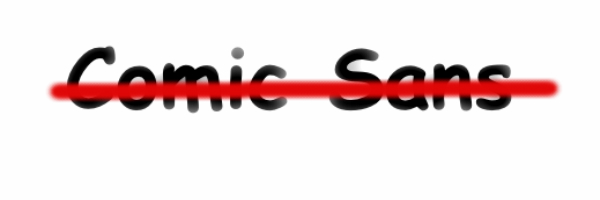
Comic Sans is one of the most popular fonts on earth, lurking amongst birthday cards, comic books, restaurant menus, signs and throughout the Web. Designed by Vincent Connare and released by Microsoft in 1994, the sans-serif casual script typeface is also the most despised font in the design world. It’s forged a phenomenon that has garnered attention from Design Week magazine to the Wall St Journal. So we bluntly asked creative types: Why do designers hate Comic Sans?
Continue reading →
Posted on Apr 22 2015 6:57 am by Web Copywriters
tags: Branding Web Design
|
category: Web world at large |
2 Comments
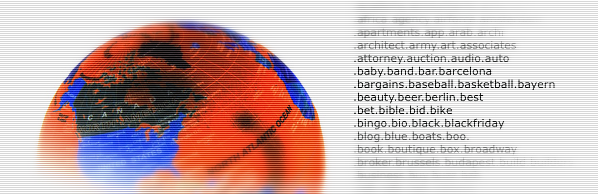
Businesses should gear up take advantage of a massive wave of 1,400 domain extensions, which could alter the landscape of SEO and marketing at large.
Continue reading →

Creative individuals tend to be spontaneous, expressive and uninhibited, and have an innate ability to see connections and relationships where others don’t. Whether you’re a designer, writer or musician, we can all sometimes use a little spark to incite new ways of solving problems and approaching situations. So here are some wise words from yesteryear that can help heighten your creativity today, and tomorrow.
Continue reading →
Posted on Dec 8 2013 9:46 pm by Web Copywriters
tags: Branding Web Design Working in the Web
|
category: Web world at large |
1 Comment
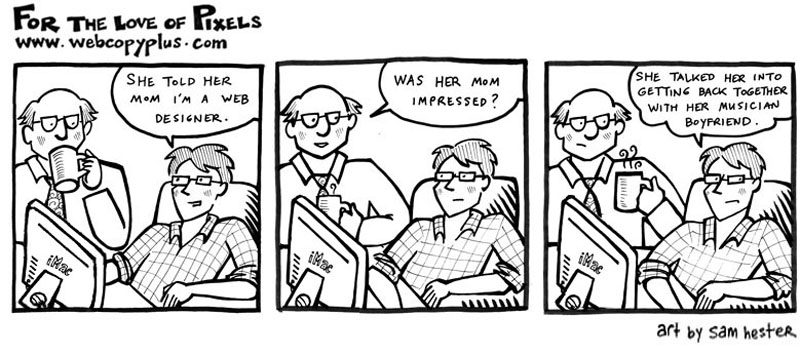
With close to 80% of North Americans using the Internet and online retail sales in the US slated to hit $370 billion by 2017, it’s mind numbing that business owners continue to discount the value web designers can deliver to their bottom lines.
Continue reading →
Posted on Sep 29 2013 7:40 pm by Web Copywriters
tags: Business and the Web Working in the Web
|
category: Web world at large |
3 Comments
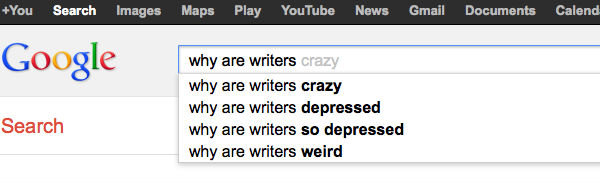
Why are writers crazy, so depressed and weird? Jeez, that’s quite a reputation to uphold! Are recurring deadlines, writer’s block or lack of sleep to blame? Or is it just that crazy, depressed and weird people tend to become writers?
What do you think? Tell us your theory in the comments below…
Posted on Jun 27 2012 12:22 pm by Web Copywriters
tags: Copywriters Working in the Web
|
category: Web world at large |
4 Comments

Is the Internet making you stupid? Many academics say sites like Twitter — and the Internet at large — are devouring our brains like zombies. But is it really the Internet’s fault that you decided to follow Snooki? No! Smart ideas do exist online, and you can absorb them into your deteriorating grey matter if you know where to find them. Then you can tell professor Mark Bauerlein (author of The Dumbest Generation: How the Digital Age Stupefies Young Americans and Jeopardizes Our Future) where he can shove it!
Continue reading →
Posted on May 25 2011 12:41 pm by Rick Sloboda
tags: Social Media Working in the Web
|
category: Web world at large |
Leave a comment

Our copywriters recently caught up to Scott Goodson, Founder and Chairman of StrawberryFrog, “the world’s first Cultural Movement agency,” with offices in New York, Amsterdam, Mumbai and Sao Paulo. Pushing innovation and brand building boundaries for over a quarter of a century with agencies based in Canada, Sweden and the US, he’s helped brands such as P&G, Heineken, Pepsico, Starbucks and Daimler Benz, to name a few. So we felt compelled to ask him about everything from when he first fell in love with the Internet to what he cherishes most about designers.
Continue reading →
Posted on May 15 2011 7:00 pm by Web Copywriters
tags: Branding Business and the Web Working in the Web
|
category: Web world at large |
1 Comment

No matter the industry, all creative professionals, and even the left-brained ones, need to look outside of our circles of influence for inspiration. By exploring new ideas, images, methodologies or concepts, we expand our minds and fuel our own creativity. This is how innovation happens, and how new products, business practices and ways of living help us grow as individuals and as a society.
Where do you look for creative inspiration? Here are some awesome locations around the Web where you can bask in the creativity of your fellow humans.
Continue reading →